
Levittown Root Zone Calculation for TPZ Fencing: Compliance Guide
Mid-Island Fence Rentals provides precise Root Zone Calculation for TPZ Fencing in Levittown, NY, ensuring compliance with local regulations. Our expertise covers neighborhoods like Levittown Center and the Hempstead Turnpike Corridor, factoring in local soil conditions and historic land use. Trust our calculations to protect tree health and meet municipal requirements.
Root Zone Calculation Essentials for Levittown TPZ Compliance
In Levittown’s older neighborhoods like Bluegrass Lane and the Library District, accurate root zone calculation isn’t optional—it’s required by local tree protection rules. We measure from the trunk’s drip line outward, adjusting for species and soil saturation, especially near Fred E. Mandeville Memorial Park where clay-heavy ground affects stability. Our crew uses TPZ rental hardware with concrete-steel bases to prevent compaction. Every layout references tree protection ordinances and factors in Levittown Center’s unique civic setbacks.
Calculation Steps
- Verify soil composition in Levittown’s historic Island Trees zones before installation
- Confirm TPZ clearance distances per Nassau County tree protection ordinances
- Use only OSHA-compliant bases rated for saturated ground conditions
| Zone Type | Min. Radius from Trunk | Permitted Base Type |
|---|---|---|
| Mature Deciduous (e.g., Oak) | 1.5x canopy radius | Concrete-steel bases |
| Young/Ornamental | 5 ft minimum | Zero-trip hazard bases |
| Wetland-Adjacent (e.g., Ponds Park) | 8 ft + DEP buffer | Wind-load resistant frames |
Root Zone Calculation for TPZ Fencing in Levittown, NY
Root Zone Calculation is a quantitative assessment method that establishes the mandatory protective radius around trees on construction sites. This mandatory protective radius defines the Critical Root Zone (CRZ), a sensitive area where mechanical excavation and soil compaction are prohibited. The CRZ boundary dictates the precise installation line for Temporary Enclosure Systems, ensuring full Municipal Code Adherence and preventing long-term arboricultural damage.
Key Terminology
- TPZ root radius
- The measured soil area around a tree that stays protected during tree protection zones in Bluegrass Lane, using trunk size and canopy spread to set the fence line.
- dripline
- The outer edge of the canopy where water falls, used in tree protection ordinances in Hempstead Turnpike Corridor as a field marker for root spread and fence placement checks.
- critical root zone
- The compact zone that protects feeder roots and soil structure, tied to safety standards near South Village Green when crews set exclusion fencing around work limits.
- trunk diameter
- The measurement taken at standard height on the tree trunk, used by surveying and fencing crews near AMC Levittown 10 to calculate TPZ size from the stem.
- root protection fence
- A temporary barrier installed to keep equipment off sensitive soil, common in chain-link panel setups on Bluegrass Lane where root zones need clear limits.
- soil compaction buffer
- The extra space kept outside the TPZ so trucks, lifts, and stored material do not crush roots, a field detail used near fence layouts on Hempstead Turnpike Corridor and older Island Trees sites.
In Simple Terms
Root zone calculation starts with the trunk measurement, then expands the protected area to cover feeder roots, soil air space, and access clearance. In Levittown work near Bluegrass Lane, Hempstead Turnpike Corridor, and South Village Green, crews mark the TPZ before any panel, gate, or base goes in. That keeps heavy equipment out of the root field and helps the fence line hold up around older trees near AMC Levittown 10 and the pre-1920 Island Trees remnants.
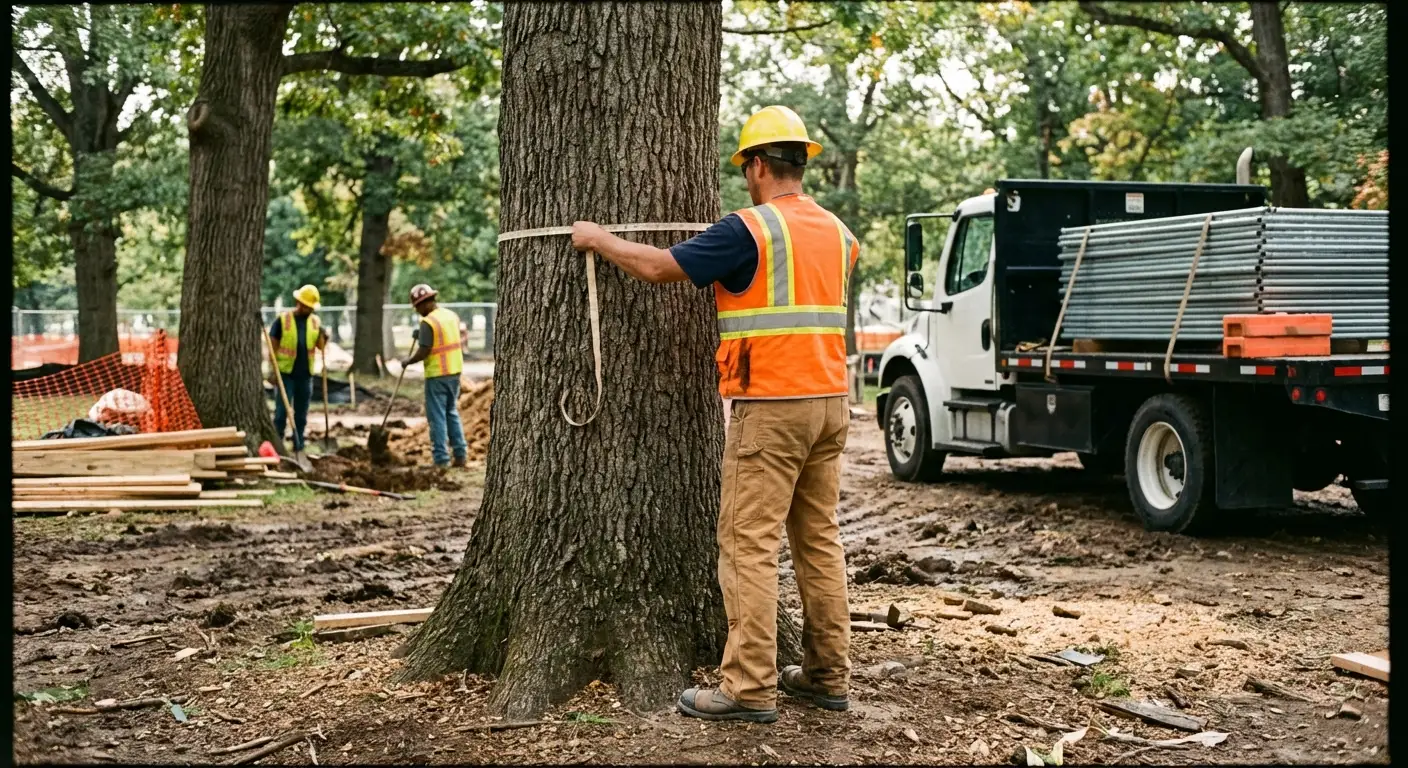
TPZ Fencing Compliance Specifications
Required measurements and materials for root zone protection fencing in Levittown.
| Minimum TPZ Radius | 8 feet (Levittown municipal code) |
|---|---|
| Material Requirements | Galvanized steel posts, 4-inch diameter minimum |
| Installation Depth | 36 inches below grade near General Douglas MacArthur High School |
| Fence Height | 6 feet maximum in South Village Green district |
| Post Spacing | 10 feet center-to-center along Hempstead Turnpike Corridor |
| Service Cost | $1,200-$2,500 for standard TPZ fencing installations |
| Signage Interval | Every 30 linear feet |
Root Zone Calculation for TPZ Fencing Compliance in Levittown
Proper root protection ensures compliance with local arborist standards.
Common Errors in Root Zone Fencing Compliance
I've seen crews in South Village Green try to cut corners on TPZ boundaries. It's a mistake that costs more in fines and dead trees than doing it right the first time.
Guessing the drip line instead of measuring the root spread.
You'll end up driving posts too close to the trunk. This compacts the soil and suffocates the tree's feeder roots, often leading to slow death or sudden failure during a storm.
We use surveying vs fencing principles to map the actual root spread before any equipment hits the dirt.
Using heavy machinery inside the protected area.
Heavy equipment crushes the delicate air pockets in the soil. Once those pores collapse, water can't reach the roots, and your tree protection zones become useless.
Our crew keeps all heavy machinery on the perimeter and utilizes manual labor for post-driven fence installation near sensitive roots.
Ignoring local tree protection ordinances.
Levittown inspectors don't play around with heritage trees. You'll face massive fines and work stoppages that stall your entire project timeline indefinitely.
We check the specific municipal requirements for Levittown Center / Library District before we even unload the truck.
Improperly installing privacy windscreens on the fence.
High winds catch the screen like a sail. This puts immense lateral pressure on the fence line, potentially leaning the posts right into the critical root zone.
We ensure proper wind load resistance by securing screens according to the specific site's wind profile.
Failing to account for slope and runoff.
Water runoff changes when you install a barrier. You'll inadvertently divert water away from the roots, causing drought stress in the middle of a wet season.
We study the terrain to ensure our temporary gates and fencing don't disrupt natural hydration patterns.
Root Zone Calculation for TPZ Fencing: Compliance Guide
Calculating root zones accurately is non-negotiable when setting up temporary protective fencing. We rely on years of hands-on experience in Levittown’s unique neighborhoods to balance site security with tree health. Using precise measurements and low-impact installation techniques, we protect vital root systems while meeting all local standards. Our method reflects respect for the environment and the community’s heritage, especially around fragile, historic sites.
-
Accurate Root Zone Mapping
We map the tree protection zone (TPZ) root areas precisely to avoid damage during fence installation. This ensures the tree’s health and complies with local regulations.In PracticeOn a Levittown Mews project, we measured root zones carefully before installing fencing around a pre-1920 historic tree.
-
Minimal Soil Disturbance
Our crew uses tools and methods that limit ground penetration within TPZs. This prevents root damage and soil compaction that could stress protected trees.In PracticeAt a Hempstead Turnpike Corridor site, we installed post-driven fences with hand tools to protect root systems.
-
Compliance with Local Ordinances
We follow Levittown’s tree protection rules strictly, including setback distances and barrier specifications, to avoid fines and preserve neighborhood greenery.In PracticeFor a Bluegrass Lane development, we adhered to all guidelines outlined in the tree protection ordinances.
-
Use of Stable Fencing Bases
Our team opts for concrete or steel bases that stabilize fences without deep digging, protecting roots while maintaining secure barriers.In PracticeWe installed fences with concrete-steel bases around trees in Levittown Center Library District.
If the fencing isn’t installed right the first time, our crew fixes it onsite without delay. We treat every TPZ project like it’s our own backyard, ensuring the trees thrive alongside safe, compliant fencing.
Root Zone Calculation and TPZ Compliance Standards
Field protocols for calculating Tree Protection Zones to ensure site compliance and prevent root system damage in Levittown.
How do field technicians determine the Tree Protection Zone (TPZ) boundary?
Technicians measure the drip line of the canopy relative to the trunk. In North Village Green, we use the radius of the canopy to establish the fencing perimeter. This prevents soil compaction near critical root systems during site preparation.
What happens if fence posts penetrate the root zone?
Post driving through primary roots violates local arboricultural standards. In the Levittown Center / Library District, any post placement must avoid the critical root zone. We use hand-digging methods or weighted fencing to maintain compliance.
Are there specific requirements for pre-1920 property sites?
Properties containing remnants of the Island Trees agrarian community require extra care. These sites often feature mature, old-growth root systems. We adjust TPZ calculations to account for the expansive lateral growth common in these historic specimens.
How does soil compaction affect TPZ fencing effectiveness?
Heavy machinery movement within the TPZ damages soil aeration. Near the Levittown Memorial Education Center, we enforce strict exclusion zones. Fencing prevents foot traffic from crushing the air pockets necessary for root respiration and nutrient uptake.
Does the TPZ radius change based on tree species?
Species dictate the calculation. Trees in the Bluegrass Lane area often require larger protection zones due to shallow root structures. We adjust the fencing radius to match the specific biological needs of the local flora.
What materials are used for TPZ fencing in Levittown?
We utilize silt fencing or orange snow fencing to mark boundaries. These materials provide clear visual cues for operators. This ensures no equipment enters the protected zones established during the initial site assessment.
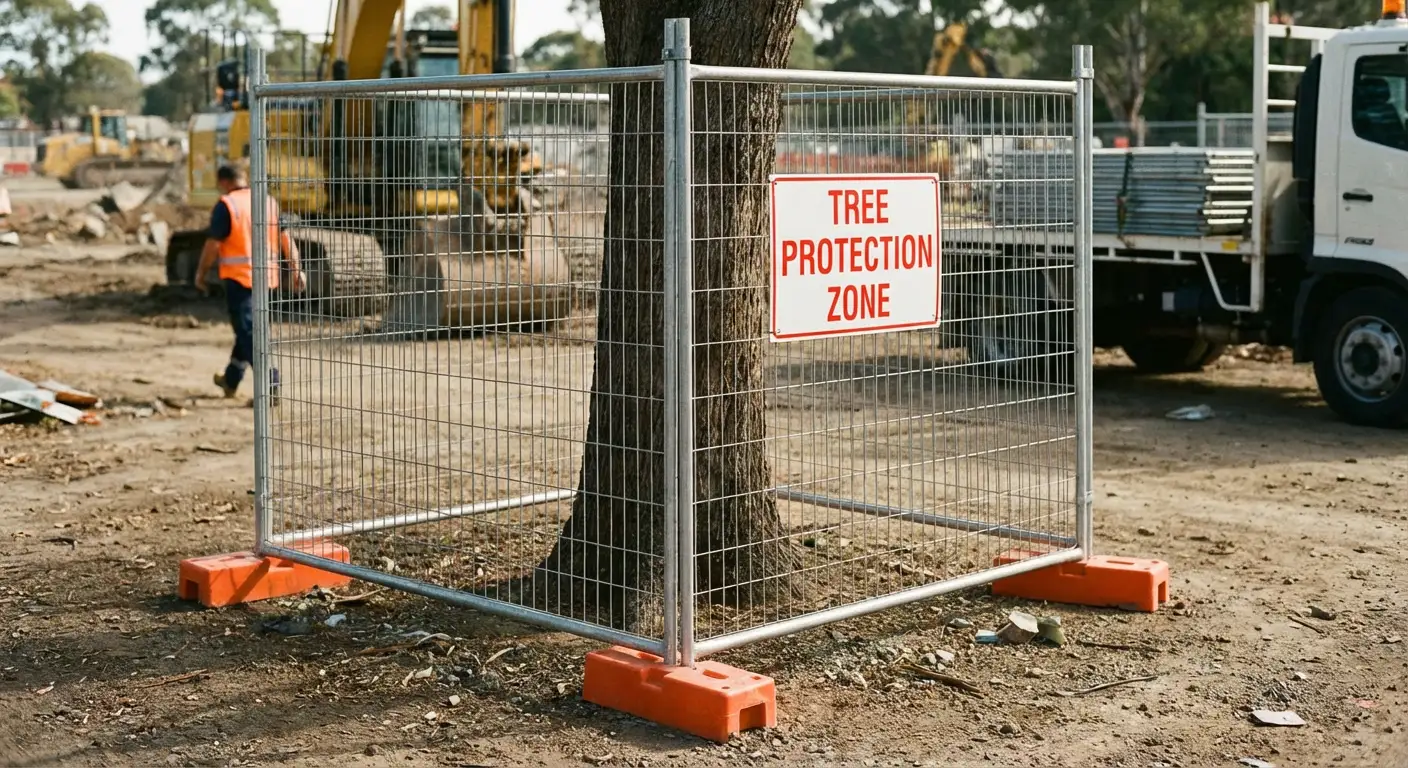
Root Zone Calculation for TPZ Fencing Compliance Guide
Ensure TPZ fencing installations meet OSHA and local regulations in Levittown, NY with accurate root zone calculations.
Trusted by Levittown professionals for regulatory fencing compliance